




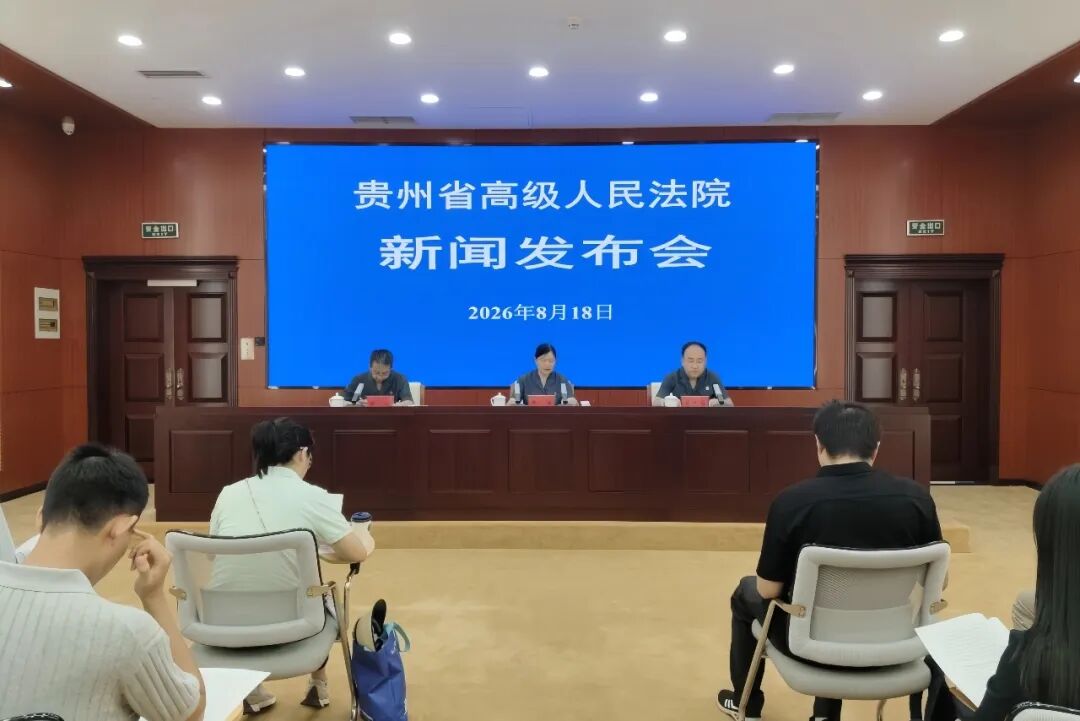
On Aug. 18, the Guizhou High People's Court released a 17-point document on strengthening judicial protection of the ecological environment in karst areas. Its release came just three days after China's Ecological and Environmental Code took effect on Aug. 15, adding a more targeted layer of judicial protection for Guizhou's karst landscapes and ecosystems.
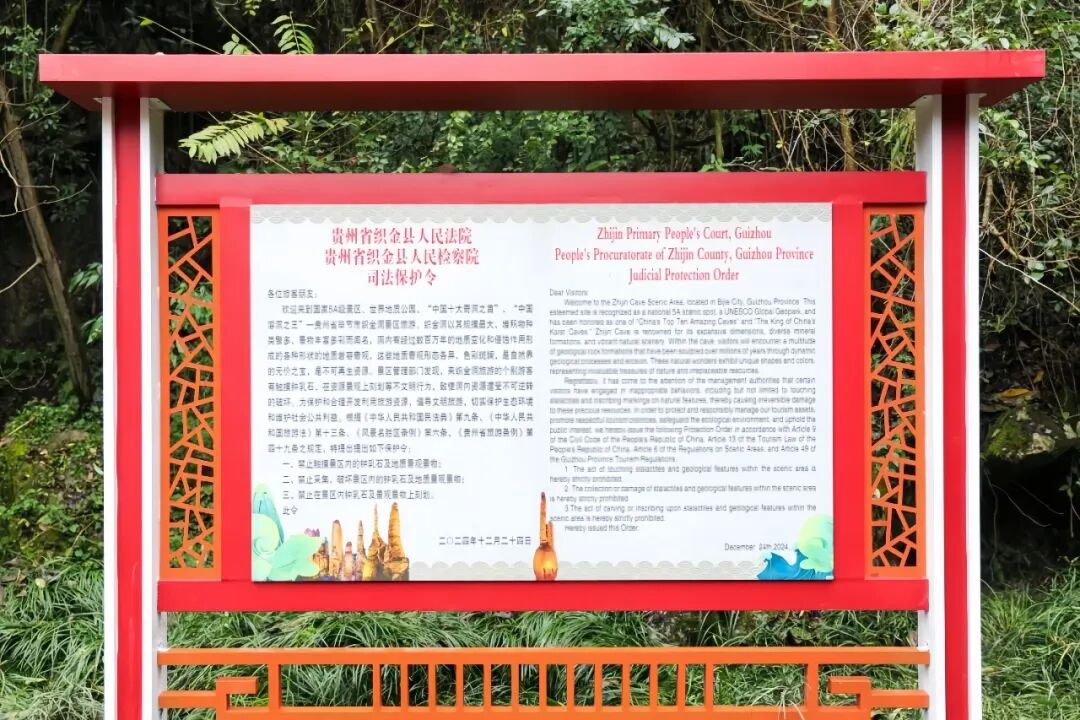
Courts across Guizhou have so far issued nearly 100 judicial protection orders for caves, with such measures introduced at sites including Zhijindong Cave, Shuanghe Cave in Suiyang and the Qingyang Dongtian Cave Complex. At Zhijindong Cave, one court order prohibits touching, removing or damaging stalactites, as well as carving or scratching cave formations and other natural features. Guizhou has also established China's first judicial protection base dedicated specifically to cave ecosystems at the Qingyang Dongtian Cave Complex.
Some cave formations have taken tens or hundreds of thousands of years, and in some cases even longer, to develop. Yet unlike listed cultural relics or well-known protected species, stalactites, stalagmites and other cave deposits are not always immediately recognized as natural heritage in need of special protection. Why, then, has Guizhou chosen to give them dedicated judicial safeguards?
The answer begins with understanding what karst means to Guizhou.
Guizhou is one of the world's most distinctive and extensively developed karst regions, with exposed karst covering 61.9 percent of the province's land area. Here, karst is far more than a collection of scenic formations scattered across the mountains. It has shaped the province's terrain, water systems and ecosystems, and remains fundamental to the relationship between people and the landscape.
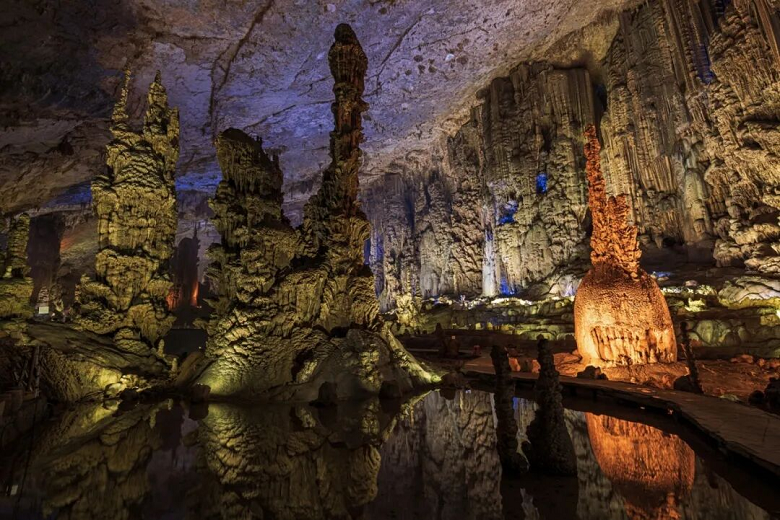
Guizhou lies in an important water-conservation area in the upper reaches of the Yangtze and Pearl river systems. Across its karst terrain, fractures, sinkholes, underground rivers and aquifers form intricate networks through which groundwater moves. Karst is also among Guizhou's most internationally recognizable natural assets. Libo Karst and Shibing Karst are both components of the UNESCO World Heritage property South China Karst, while Zhijindong Cave is a UNESCO Global Geopark. Shuanghe Cave, meanwhile, has drawn sustained international scientific interest for its vast cave system. Speleothems, the mineral deposits that form inside caves, can also preserve long records of past climate and environmental change, making them valuable natural archives of Earth's history.
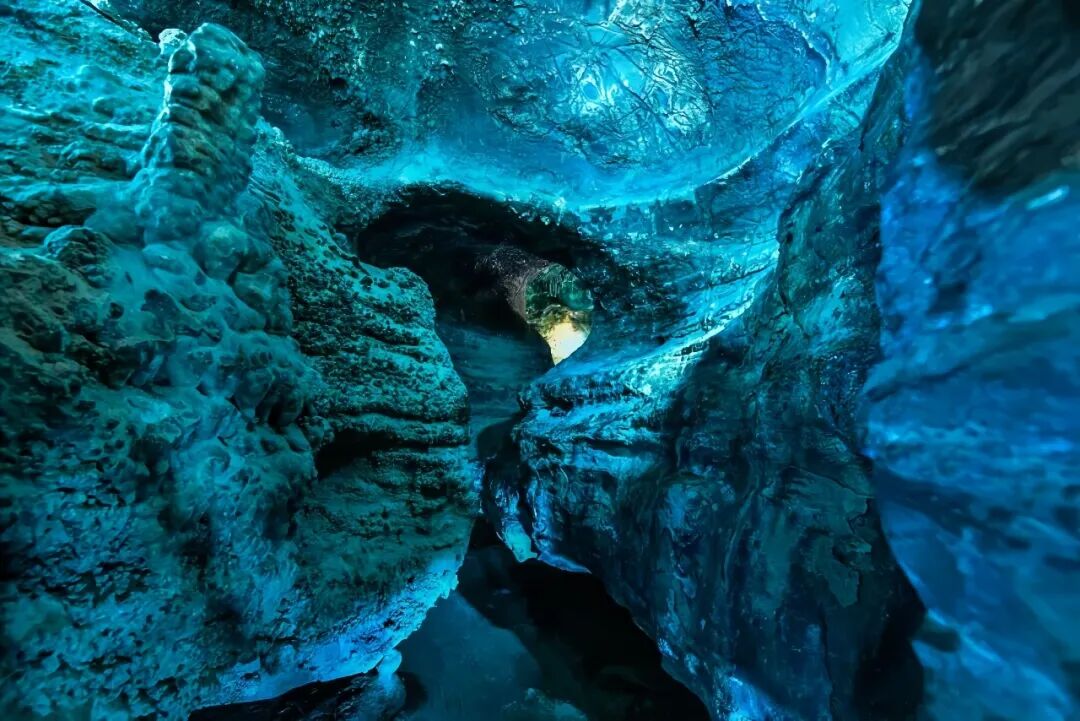
Karst has helped define both the physical landscape and ecological character of Guizhou. Protecting it therefore means much more than preserving a handful of spectacular caves or limestone peaks. It means safeguarding an interconnected system that supports water resources, biodiversity, natural heritage and local development.
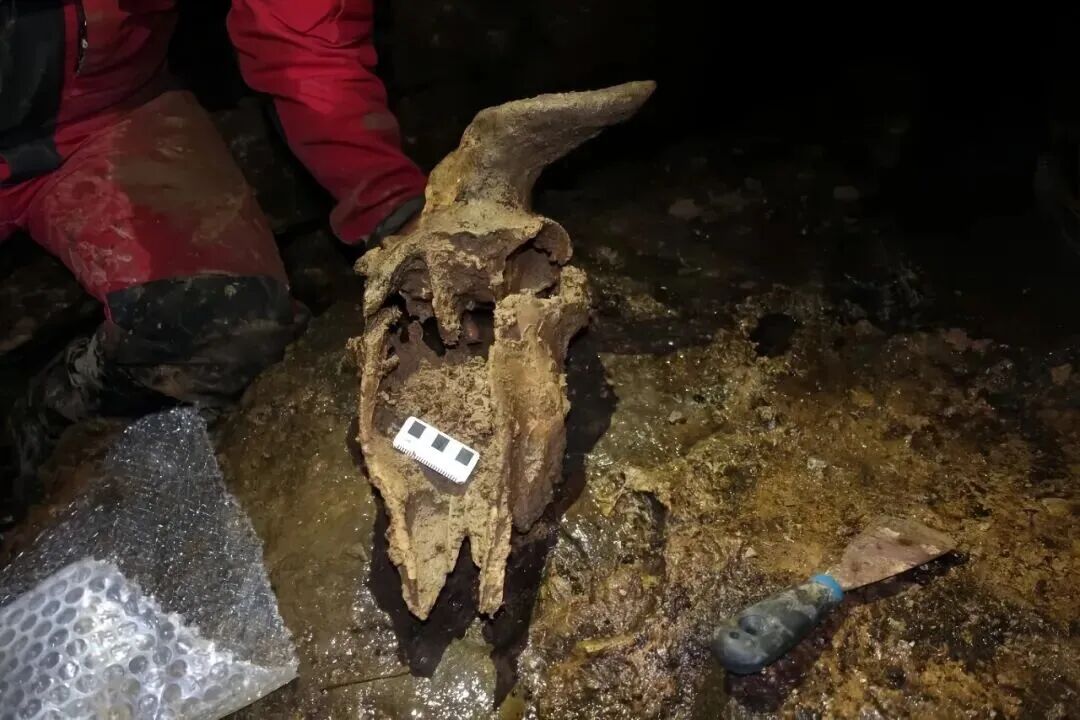
Yet this natural heritage, shaped over immense spans of geological time, is also exceptionally fragile. Much of the damage it suffers is effectively irreversible on any human timescale.
The first source of vulnerability is time itself. Stalactites, stalagmites and other speleothems form as mineral-rich water seeps through rock and deposits minerals, most commonly calcium carbonate. Their growth rates vary widely with temperature, water chemistry, drip rates and other local conditions, but many accumulate by only fractions of a millimetre a year. Some preserve environmental records spanning tens or even hundreds of thousands of years. Breaking off part of a formation can interrupt a natural growth process that has continued for centuries or millennia, while a carved mark may permanently alter a feature shaped over an extraordinary length of time. No amount of financial compensation can truly return such geological heritage to its original state.
The second vulnerability comes from the hidden connectivity of karst. Caves in Guizhou are often not isolated underground chambers but parts of much larger hydrological systems. Pollutants released at the surface can enter aquifers through sinkholes, karst windows and fractures, and then move through groundwater networks. Because water flows through karst along highly uneven and often concealed pathways, contamination can be difficult to trace, contain and clean up. Protecting a cave therefore cannot stop at the cave entrance: it also requires attention to the surface catchment and the groundwater system connected to it.
Often overlooked is the fact that a cave is also an ecosystem. Life adapted to prolonged darkness, scarce nutrients and relatively stable conditions can include cavefish, cave-dwelling insects and distinctive microbial communities, some with extremely restricted ranges. For such highly specialized organisms, changes in water quality, hydrology, light, noise or the intensity of human activity can have serious consequences. Where a species is confined to a single cave or groundwater system, severe habitat damage can put an entire population at risk.
It is precisely this combination of exceptional value, ecological fragility and limited capacity for recovery that has pushed Guizhou toward a more prevention-focused model of judicial protection. The new document calls for stronger pollution control, biodiversity conservation and better-regulated use of karst caves. It also targets activities such as illegal wastewater discharges, solid-waste dumping, damage to cave formations and the destruction of karst landscapes in protected areas. The reasoning is straightforward: where environmental damage may be extremely difficult or impossible to reverse, the law is more effective when it helps prevent the harm rather than merely assigning liability after the fact.
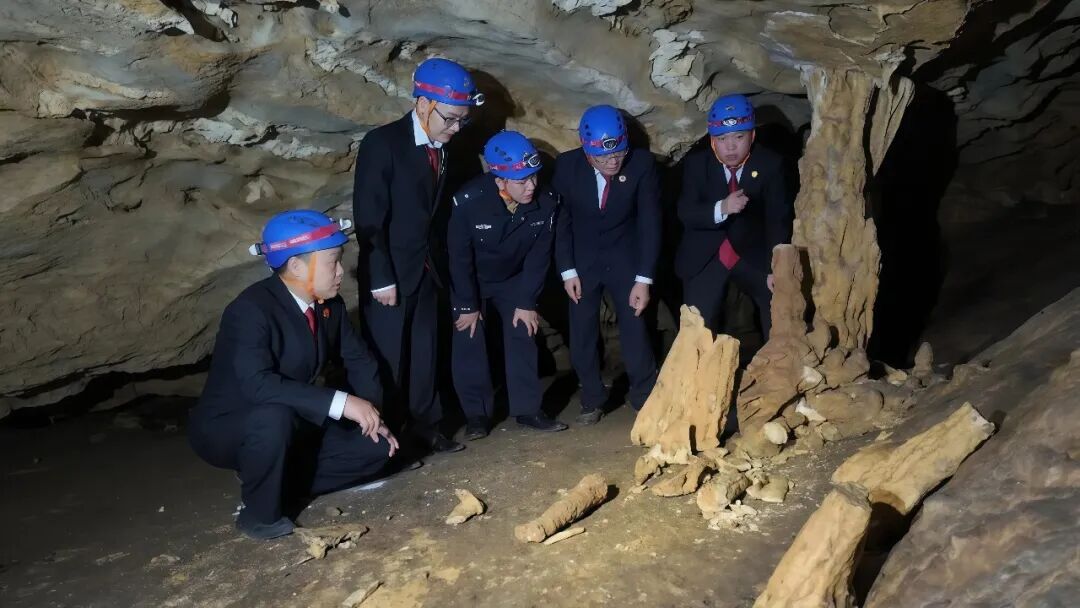
We often speak of the value of natural heritage, but some forms of that heritage were created on timescales far beyond a human lifetime. A single stalactite or stalagmite can hold a record of environmental change stretching deep into the past, while an interconnected karst system may sustain highly specialized and fragile communities of life. Faced with such a legacy, humanity is better understood as its temporary custodian than its unrestricted owner.
Rather than waiting until damage has been done and then asking how much compensation should be paid or whether restoration is still possible, the more effective approach is to stop ecological risks from becoming irreversible losses in the first place, while keeping development within the limits that these fragile systems can bear. For Guizhou, that is the deeper significance of bringing the law more firmly into the protection of karst.